Uncover 6 ways to reduce your tax bill
Morgan Stanley Wealth Management
02/26/26Summary: Examining your tax return may reveal opportunities to save money hidden between its lines. You may be surprised by what you find.

When tax season is in full swing, your federal tax return is generally at the forefront of your mind. But when tax season is over, your return is often just an afterthought. Here’s why you may want to change that. Your 1040 may reveal important information about your personal finances that can help provide you with valuable opportunities for future savings.
So, before you put these documents away in a folder somewhere (you must keep them for at least three years), consider asking yourself these six questions to potentially reduce your tax bill next year:
1. Could I be doing more to minimize my exposure to current taxes?
Find clues here: Page 1-Tax-Exempt and Taxable Interest (Lines 2a & 2b). You generally owe taxes on the taxable interest, found in Line 2b.
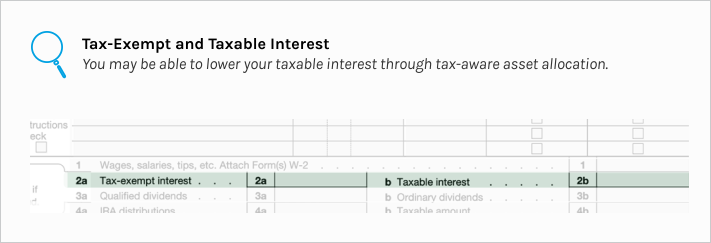
Your next step: If the sum on line 2b makes you uneasy, consider whether there’s more you could do to reduce your taxable interest in future years. Generally, if you receive interest income from bonds, mutual funds, certificate of deposits or demand deposit accounts, these will be taxed. Tax-aware asset location may help reduce the impact of taxable interest. The strategy involves keeping high-yield securities in tax-deferred accounts while putting tax-efficient, lower-growth assets in taxable accounts. You might be able to further reduce interest by swapping corporate bonds for municipal bonds with a similar yield but a lower tax impact.
2. Did I make the most of any investment losses?
Find clues here: Page 1- Capital gains or losses (Line 7)
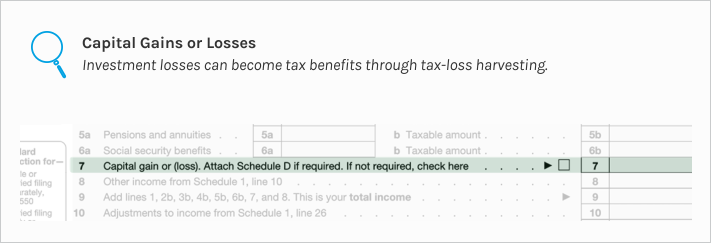
Your next step: Typically, investors think about tax-loss harvesting toward year end, but you can use this strategy year-round to turn investment losses into tax benefits. By selling securities that have lost value, you may be able to utilize these realized losses to offset realized capital gains. Any excess losses can be used to offset up to $3,000 ($1,500 if married filing separately) in ordinary income that year as well. Any remaining losses can be carried forward as long as you are living. So, if you had more than $3,000 in capital loss carryforward last year, you can use them to offset gains or ordinary income on this year’s taxes.
3. Can I support my favorite charities in a tax-efficient way?
Find clues here: Page 1 - IRA Distributions (QCD) (Lines 4a-4b)
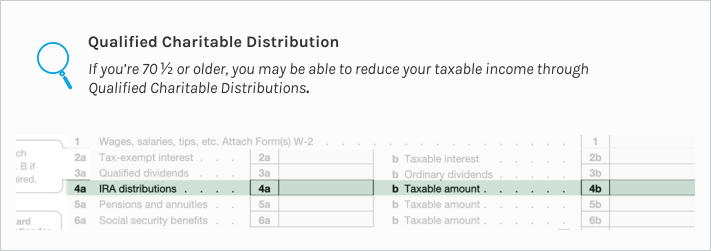
Your next step: If you’re 70 ½ or older you may be able to reduce your federal taxable income by giving to causes you care about through a Qualified Charitable Distribution (QCD). QCDs generally come with no tax costs to you or the charity receiving the donation – allowing you to count a QCD toward your required minimum distribution for the year, if certain rules are met.
4. Can I reclaim my foreign taxes?
Find clues here: Schedule A- Taxes Paid (Lines 5-7): Schedule A: Taxes Paid breaks out the total amount you paid in taxes (other than federal) last year, including foreign taxes.
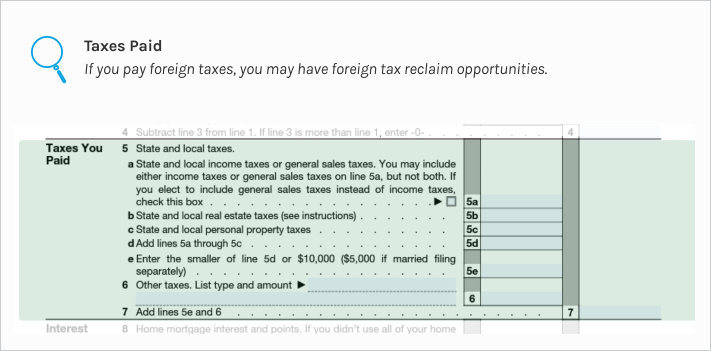
Your next step: If you reported paying foreign taxes, you may have foreign tax reclaim opportunities. Many countries have double taxation treaties, which allow you to reclaim some foreign taxes, if you do so within the statute of limitations.
5. Could I be saving for future education costs in a more tax-advantaged way?
Find clues here: Page 1 – Dependents: If you have children, grandchildren or other young loved ones you wish to support, one of the most important gifts you can give is access to quality education.
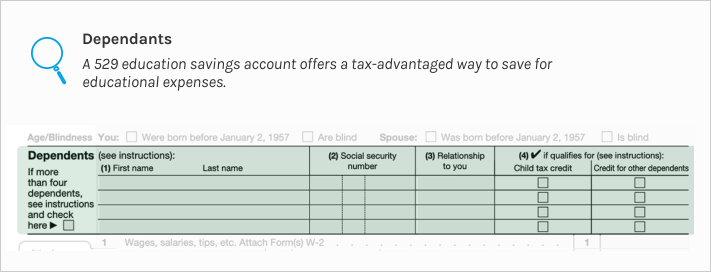
Your next step: With education costs rising, investing in a 529 plan can you help you pay for higher education expenses. You may get a state tax break on the contributions, and the money grows tax-free and comes out tax-free if used for qualitied education expenses. The One Big Beautiful Bill Act (OBBBA) has expanded the definition of qualified expenses to include a broader range of non-tuition costs and funds can now be used for a wider array of career-oriented programs.1
6. Could I save on my medical and dental expenses?
Find clues here: Schedule A – Medical and dental expenses (Lines 1-4): If your medical and dental expenses amounted to more than 7.5% of your adjusted gross income last year, Line 4 will show your deduction. You may also be able to include medical or dental expenses you paid on behalf of your spouse or your dependent. You cannot include medical expenses paid for or otherwise reimbursed by insurance or other sources.
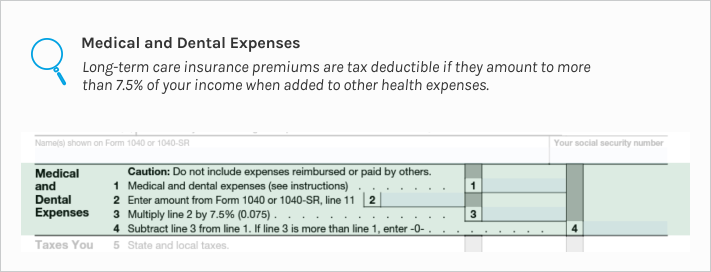
Your next step: Even if your medical expenses aren’t high enough to itemize now, most people’s healthcare costs go up significantly as they get older. Adding a long-term care insurance policy could help minimize such costs, and premiums may be tax deductible.
Article Footnote
1 One Big Beautiful Bill Act (OBBBA) legislative text and official bill summary, as published by the U.S. Congress. https://www.congress.gov/bill/119th-congress/house-bill/1/text
CRC# 5217786 02/2026
How can E*TRADE from Morgan Stanley help?
Visit the Tax Center
For additional tax-related information, including commonly asked questions, articles, and other tools, visit our Tax Center.
Roth IRA1
Tax-free growth potential retirement investing
Pay no income taxes or tax penalties on qualified distributions if you meet certain requirements.
Max-Rate Checking
A fee-free checking account, built to do more
Seamless money movement, up to Annual Percentage Yield,2 and ATM fee refunds worldwide.3,4
Morgan Stanley Private Bank, Member FDIC.