The Robot Almanac
Your guide to the robotics revolution
Everyone is talking about AI. But what happens when AI gets a body? Morgan Stanley Research estimates AI robotics could reach $25 trillion in annual product revenue by 2050. In about an hour, get a framework to understand what may become one of the largest technology investment opportunities of the coming decades and the risks that could shape its development.

See where AI may be headed next—and why it matters for investors like you
Follow AI’s move from software into the physical world, one episode at a time. The Robot Almanac is a multi-part video series that breaks down robotics, embodied AI, automation, and the technologies powering their evolution. Narrated by Adam Jonas, Morgan Stanley’s Global Embodied AI and Robotics Strategist, each concise episode helps investors identify the trends, risks, and opportunities that may shape the next era of global economic growth.
Episode 1
What happens when AI enters the physical world?
The Robot Almanac: Introduction to Physical AI
See what happens as AI evolves beyond software to move, build, drive, and fly.
Machines can now sense and interact with the world around them. Morgan Stanley Research explains why robotics could become one of the most important technology and investment themes of the coming decades, and where adoption may accelerate first.
Episode 2
How will we train our robots?
The Robot Almanac: How to Train Your Robot
Before robots can work alongside humans, they need to learn how the physical world works.
Go inside the data pipelines, simulations, and model training that teach machines how to navigate the real world, and see why the race to build and scale better robots may depend as much on chips, sensors, and infrastructure as AI itself, creating winners and losers across the robotics economy.
Episode 3
What will the robots of the future look like?
The Robot Almanac: Humanoids & Industrial Robots
Explore what the robots of the future could look like as the convergence of software and hardware powers a new generation of flexible, autonomous industrial machines. Learn why these technologies could reshape productivity across factories, warehouses, and logistics networks, and where value may be created across the ecosystem.
Episode 4
Can AI learn to fly?
The Robot Almanac: Drones & Air Mobility
The robotics revolution is not confined to the ground.
See how and where drones and autonomous air systems are creating new opportunities across infrastructure, agriculture, logistics, and defense, and discover the technologies, regulations, and market signals investors should be watching.

Episode 5
How far can physical AI go?
The Robot Almanac: Space & Defense
Some of robotics' most powerful applications may emerge in the most demanding and uncharted environments.
Explore how robotics and automation are extending human capability into space and defense while accelerating innovation in sensing, computing, mobility, and communications technologies. And how advances born in these environments create opportunities across the broader economy.
Episode 6
Can cars think for themselves?
The Robot Almanac: Autonomous Vehicles
See what it takes for AI to navigate the real world at scale as self-driving cars and autonomous vehicles become some of the most advanced tests of physical AI, where perception, prediction, safety, and decision-making converge on public roads every day. Learn which technologies, infrastructure, and adoption hurdles could shape the future of autonomous mobility.
Episode 7
What happens when minds and machines connect?
The Robot Almanac: Brain-Computer Interfaces & Emerging Form Factors
As machines become more intelligent, the boundary between humans and technology continues to blur. Explore the emerging technologies connecting minds and machines and consider how the next generation of human-AI interaction could unlock entirely new frontiers for robotics and automation. Understand why this evolving relationship may become an important issue in the future of AI.
Episode 8
Who stands to benefit most?
The Robot Almanac: Big Tech's Physical AI Journey
Every robotics breakthrough depends on the technologies powering it.
In the final episode, Morgan Stanley Research examines how the world's largest technology companies are helping bring AI into the physical world and where value may be unlocked across chips, cloud infrastructure, software platforms, and robotics ecosystems.
Connect the dots across the series and see who may be best positioned to benefit as physical AI scales.
What is physical AI?
Physical AI refers to artificial intelligence that can perceive its surroundings, reason about what it sees, and take action in the real world. Unlike AI systems that primarily generate digital content, physical AI powers machines such as robots, autonomous vehicles, and drones.
These systems combine AI models with sensors, cameras, computing, software, and mechanical components. Together, those technologies allow a machine to navigate changing environments, manipulate objects, and perform increasingly complex tasks.
Meet the host
Adam Jonas, Global Embodied AI and Robotics Strategist
Few analysts have spent more time studying the intersection of AI, automation, mobility, and robotics than Adam Jonas.
At Morgan Stanley, Jonas helps investors understand how emerging technologies could reshape industries, create new markets, and redefine how value is created across the global economy.


Find ETFs connected to the robotics economy
Explore curated lists of exchange-traded funds focused on technologies related to robotics and physical AI.
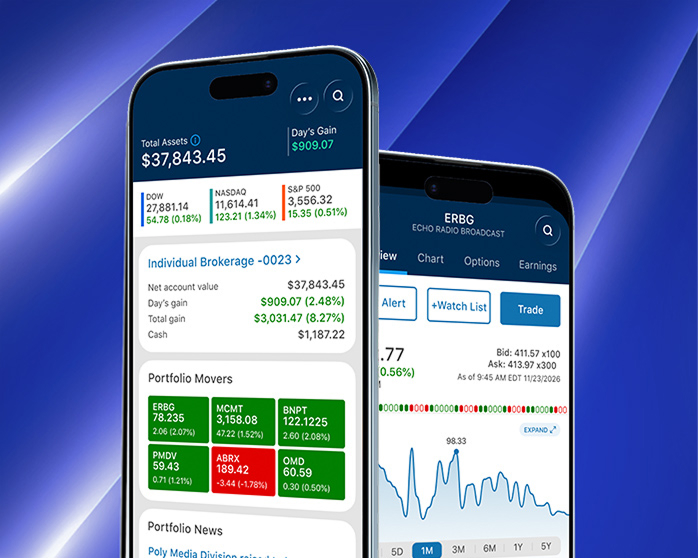
Make your next move count with E*TRADE
Open an E*TRADE account today and trade on your terms, with tools, insights, and the confidence of Morgan Stanley behind you.
Education and resources
Insights to stay informed and inspired
Keep exploring the trends, technologies, and market developments shaping the future of investing.
-
 Why the biggest AI opportunity is still ahead
AI’s next wave may reward companies using the technology most effectively—not just those building it. Here’s what investors can watch as AI moves toward profits.
-
 The long-term opportunity in AI infrastructure stocks
As investors continue to debate the scale, pace and returns of AI spending, Morgan Stanley Research revisits the long-term bull case for AI infrastructure and where opportunities may emerge across the ecosystem.
-
 2026 Midyear Investment Outlook: Constructive, not complacent
AI infrastructure investment is boosting the outlook for risk assets, particularly U.S. equities, despite geopolitical risks. Credit markets could face challenges as companies increase bond issuance.
-
 Who is leading the global AI race?
The U.S. and China are in a race for AI dominance. Here’s how each country stacks up, along with opportunities for investors across the AI ecosystem.
-
 Tech outlook: GenAI revenue could surpass $1 trillion by 2028
Software and internet companies are likely to see their revenue from generative AI rise more than 20-fold over the next few years.
-
 2026 Midyear Economic Outlook: AI drives resilient growth
Growth softens in the second half of 2026, hurt by higher energy prices, but recovers in 2027 in a baseline outlook that includes a resolution of the oil supply shock.
-
 Podcast: Thoughts on the Market
Listen to our daily financial podcast, featuring perspectives from leaders within Morgan Stanley and their takes on the forces shaping markets today.
Morgan Stanley Research
Explore more market insights from Morgan Stanley
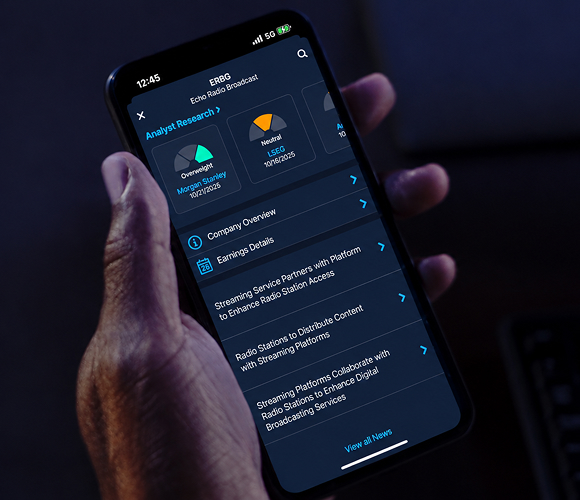
Go beyond robotics with actionable perspectives across markets, economics, investing, and innovation from Morgan Stanley Research.
Frequently asked questions
-
Physical AI is artificial intelligence that can perceive, reason, and act in the real world. It can power robots, autonomous vehicles, drones, and other machines that interact with physical environments.
-
Embodied AI refers to intelligence operating through a physical system or “body.” The system uses sensors and AI models to understand its surroundings and take actions through a robot, vehicle, or other machine.
-
Potential applications include manufacturing, transportation, logistics, agriculture, health care, aerospace, defense, infrastructure inspection, and consumer services.
-
Investors can research individual companies, diversified funds, and thematic ETFs connected to artificial intelligence, industrial automation, autonomous vehicles, semiconductors, and other enabling technologies. Investments should be evaluated based on their objectives, holdings, fees, concentration, and risks.
-
Risks may include high valuations, uncertain adoption timelines, technological limitations, competition, regulation, cybersecurity, supply-chain constraints, and concentration in early-stage or volatile companies.