 Refresh October 09, 2026 10:49 AM ET
Apply for an options account Already a brokerage customer?
|
Purchasing calls has remained the most popular strategy with investors since listed options were first introduced. Before moving into more complex bullish and bearish strategies, an investor should thoroughly understand the fundamentals about buying and holding call options.
Market opinion? Bullish to very bullish. When to use? Bullish Speculation This strategy appeals to an investor who is generally more interested in the dollar amount of his initial investment and the leveraged financial reward that long calls can offer. The primary motivation of this investor is to realize financial reward from an increase in price of the underlying security. Experience and precision are key to selecting the right option (expiration and/or strike price) for the most profitable result. In general, the more out-of-the-money the call is the more bullish the strategy, as bigger increases in the underlying stock price are required for the option to reach the break-even point.
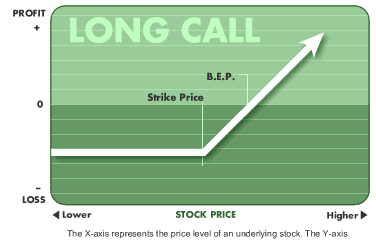
As Stock Substitute Note: Equity option holders do not enjoy the rights due stockholders ? e.g., voting rights, regular cash or special dividends, etc. A call holder must exercise the option and take ownership of the underlying shares to be eligible for these rights. Benefit? A long call option offers a leveraged alternative to a position in the stock. As the contract becomes more profitable, increasing leverage can result in large percentage profits because purchasing calls generally requires lower up-front capital commitment than with an outright purchase of the underlying stock. Long call contracts offer the investor a pre-determined risk. Risk vs. Reward? Maximum Profit: Unlimited
Maximum Loss: Limited
Upside Profit at Expiration: Stock Price - Strike Price - Premium Paid Your maximum profit depends only on the potential price increase of the underlying security; in theory it is unlimited. At expiration an in-the-money call will generally be worth its intrinsic value. Though the potential loss is predetermined and limited in dollar amount, it can be as much as 100% of the premium initially paid for the call. Whatever your motivation for purchasing the call, weigh the potential reward against the potential loss of the entire premium paid. Break-Even Point (BEP)? BEP: Strike Price + Premium Paid Before expiration, however, if the contract's market price has sufficient time value remaining, the BEP can occur at a lower stock price. Volatility? If Volatility Increases: Positive Effect If Volatility Decreases: Negative Effect Any effect of volatility on the option's total premium is on the time value portion. Time decay? Passage of Time: Negative Effect The time value portion of an option's premium, which the option holder has "purchased" by paying for the option, generally decreases, or decays, with the passage of time. This decrease accelerates as the option contract approaches expiration. Alternatives before expiration? At any given time before expiration, a call option holder can sell the call in the listed options marketplace to close out the position. This can be done to either realize a profitable gain in the option's premium, or to cut a loss. Alternatives at expiration? At expiration, most investors holding an in-the-money call option will elect to sell the option in the marketplace if it has value, before the end of trading on the option's last trading day. An alternative is to exercise the call, resulting in the purchase of an equivalent number of underlying shares at the strike price. Important Note: Options involve risk and are not suitable for all investors. For more information, please read the Characteristics and Risks of Standardized Options. |


 Back to Top